


For a brief weekend ten days ago, much of North America experienced Thunder Bay weather – except for Thunder Bay.
While 210-odd million people struggled with a disco ball of polar vortices partying down with atmospheric rivers, Thunder Bay was fantastically sunny. Cold, but sunny.
Don’t get me wrong – we’ve had our share of snow already. In fact, since I started this post a paragraph ago, it’s started to come down again. Which means more snowblowing. And with it, more time listening to Dialogue: The Art of Verbal Action for Page, Stage, and Screen by Robert McKee.
I latched onto this book because long-time friend Joanne Hudspith asked me if I knew any good craft books about dialogue. I didn’t, but when I looked around, this looked like a good bet. I get 15 free(?) audiobook hours with my Spotify account per month, which aligns nicely with my 15+ hours of snowblowing a month. So I thought I’d give it a try.
Spoiler alert: I highly recommend it. (The book. Not the snowblowing.)

This is a dense, deep (deep!) dive not only on dialogue itself but its integration with and role in story. McKee uses real-life examples like the novel The Great Gatsby and the movie Sideways – right up my alley! He even rewrites certain passages to underline why the originals work so well.
One of the realizations I had while listening to Dialogue is that I have difficulties with implicit rather than explicit writing. It isn’t a skill I’ve developed to any great extent – at least, not to the level I need to be at for fiction writing and storytelling.
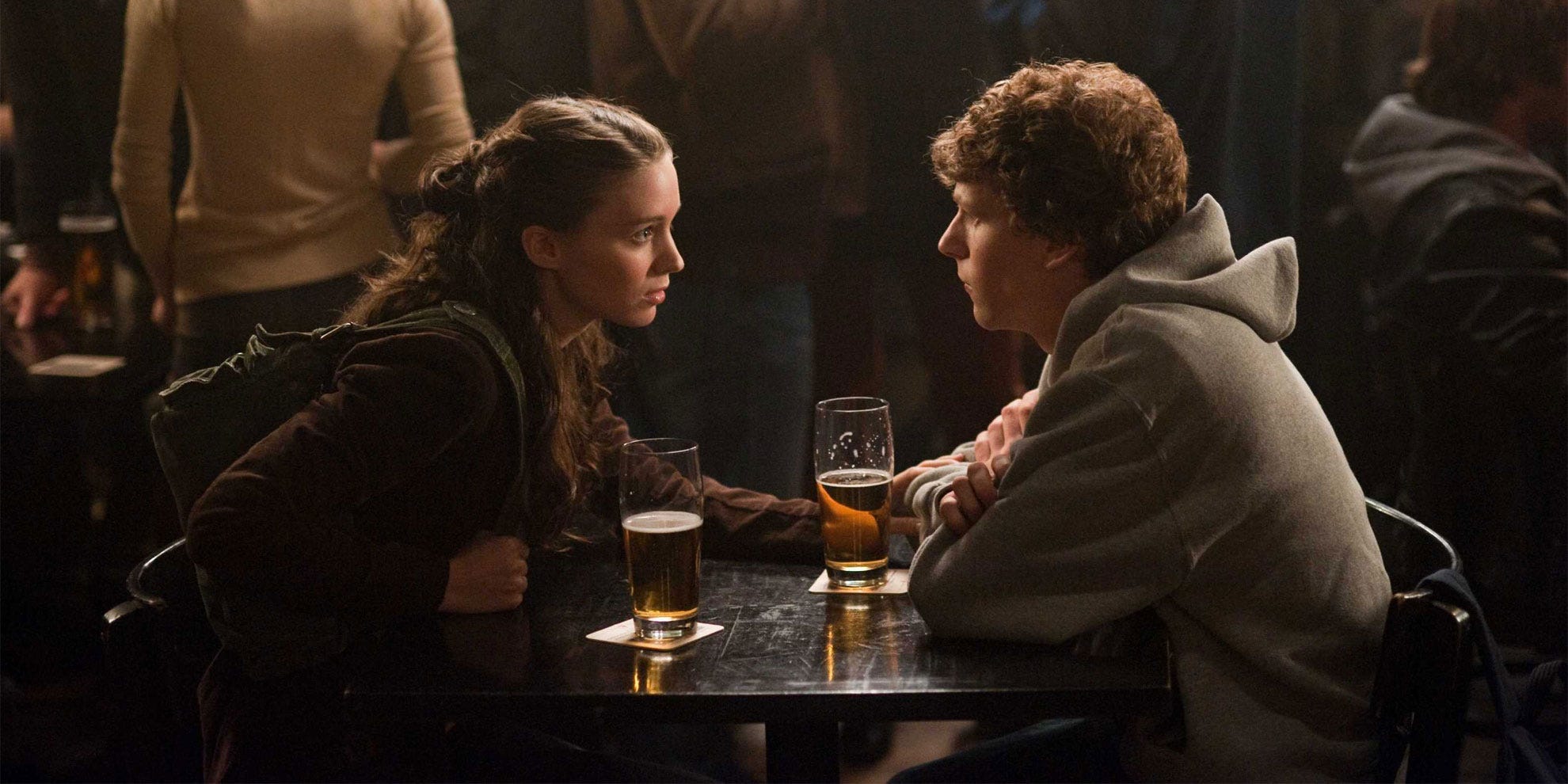
I’ve been actively developing my implicit storytelling the last several months. During #GraNoWritMo in November, I was about to write a dialogue-heavy scene, and I wanted to sharpen my dialogue skills while I was at it. One thing that came up in my Google search to find good bits of dialogue was the first scene of the movie The Social Network, written by Aaron Sorkin. It’s two university students sitting in a pub, talking. Pretty straightforward, right? Except that she is breaking up with him, he’s (awkwardly) trying to connect with her, and there’s a whole lot of other stuff going on to set up his character and the story to come.
You can watch it quickly here to see what I mean:
I’m extremely happy with the scene I wrote after that little exercise. It helped me write a compelling interaction that took on a new dimension, just like those 3D Magic Eye posters from the 90s. We learn more about the MC including his underlying personality and motivations. The scene represents a much-needed win for the MC, making it important turning point in the story as well. And, we learn more about the minor character in the conversation. We certainly don’t need to know about this person since we’ll never hear from him again. But that 3D-ness of the minor character development makes the scene more engaging, which in turn makes the development of the MC more engaging, and then in turn the story more interesting.
Bippity, boppity, boo.
That’s my take, anyway. My beta readers somewheres down the road will be able to tell me if I pulled it off. But I feel myself growing as a fiction writer which, for the purposes of this post, is the point.
Anyway, the snow’s still coming down. Looks like I’ll be listening to Dialogue some more, later today. I’ll keep you posted with any new insights.
Stay warm!
Key Takeaways: If you’re trying to improve your dialogue and your fiction writing in general: (a) read Dialogue by Robert McKee and (b) study Aaron Sorkin’s scripts, especially the opening scene to The Social Network.

Over to You…
How do you improve your dialogue writing? Any books that Joanne and I should check out? Let us know in the comments below!
Until next time, keep writing with wild abandon!
~Graham

email me if you get lost.
Dialogue. My Achilles’ heel. McKee ordered.
Thank you for this reference, Graham. In case you have not read him, I recommend Jim Cummings -- one of Substack's best story tellers with a true gift for dialogue. Here is a short period piece, two people talking, neither of them listening. He doesn't name the era, but the details and the dialogue take us there. https://jimcummings5251.substack.com/p/a-letter-from-proxmire