


I’ve stated in these pages before that I have a hard time discerning whether my fiction passages are good or bad.
It’s a weird feeling because generally speaking, I know when my day-job writing is working. Perhaps it’s because writing an 80,000-word novel is more complex, nuanced, and interconnected than a 500-word article. Fiction requires different skills including elements of storytelling that I’m still learning. But I see myself getting better at identifying when something works and when something doesn’t.
Ultimately, I think every writer needs somebody to bounce ideas off of: a first reader, beta readers, and for the lucky, editors and agents. What can be crystal clear in your mind might not translate onto the page in a way that makes it understandable to the reader. To borrow a phrase: You don’t know what your readers don’t know.
That being said, I do believe it’s the writer’s responsibility to try to illuminate some of those blind spots in the early stages that you can give the best possible version of your work to those first readers. Why waste the time of a reader with something that’s less than your best?

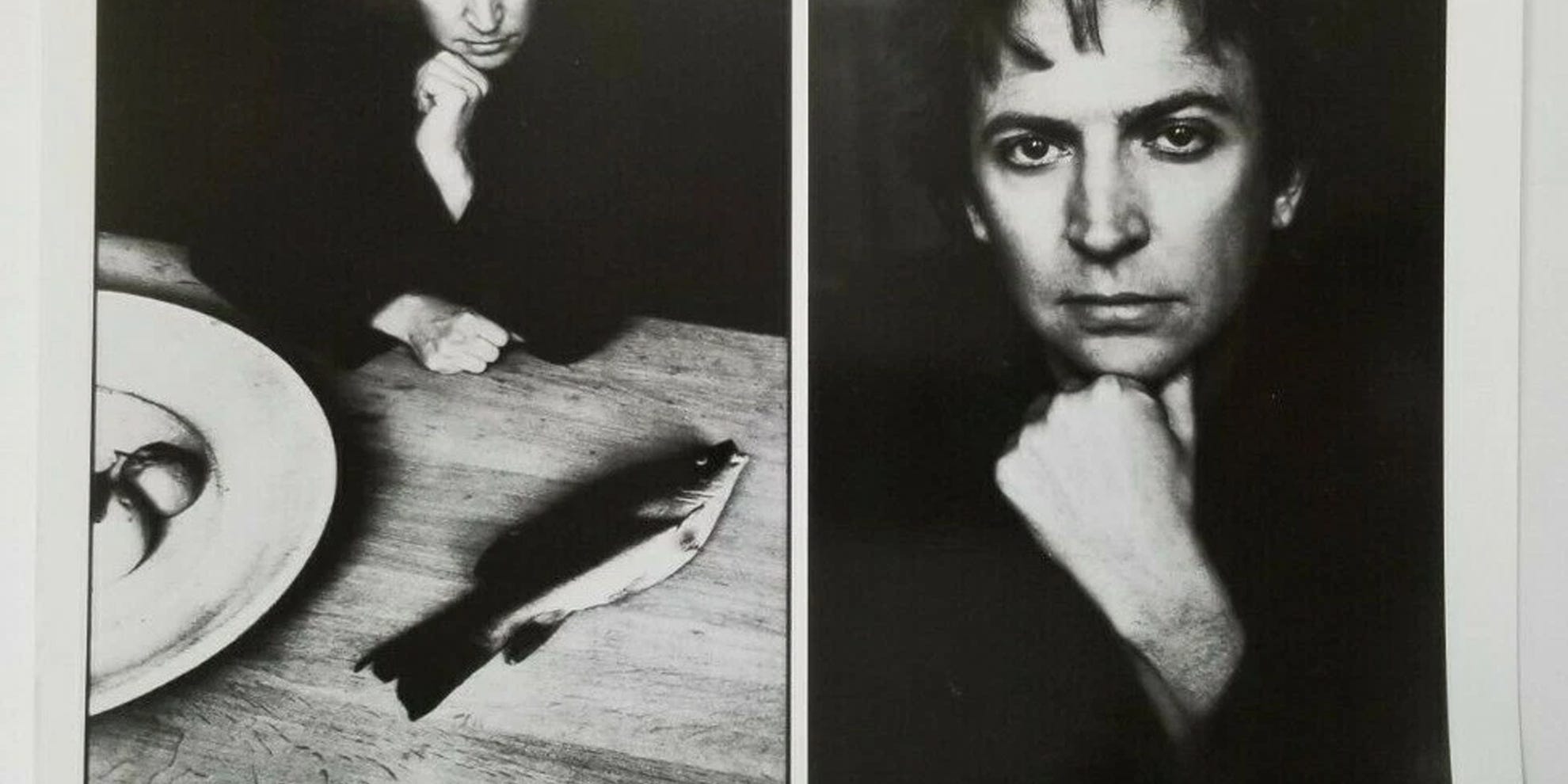
The classic tip is to put your writing aside for days or weeks and read it with fresh eyes. That still holds true. But I got another idea from a video on YouTube of Andy Summers from The Police talking about getting perspective while writing music. Context is everything, and where you experience the work can change your context.
“Just a small technique in terms of making a record*… go play it in a few different places because I get a completely different view of it. It’s a good way to test out its strength.”
Andy Summers, Guitarist, The Police
In other words, a change of scenery during the review stage changes your perspective from the creation stage. And, if the theory holds, that change in perspective can help you decide if the piece is good or not.
Sounded like it was something worth trying. So, I printed off a scene from my novel WIP I am particularly happy with, and took it to the living room to read. Then, I took it to a coffee shop. The weekend before last, I took it with me to the Laughing Foxes Writing Retreat, and read it over coffee while looking at Marie Louise Lake in Sleeping Giant Provincial Park.
I decided not to edit – that could come another time. I just wanted to let the words flow over me.
That was the theory. However, that’s not quite what happened…
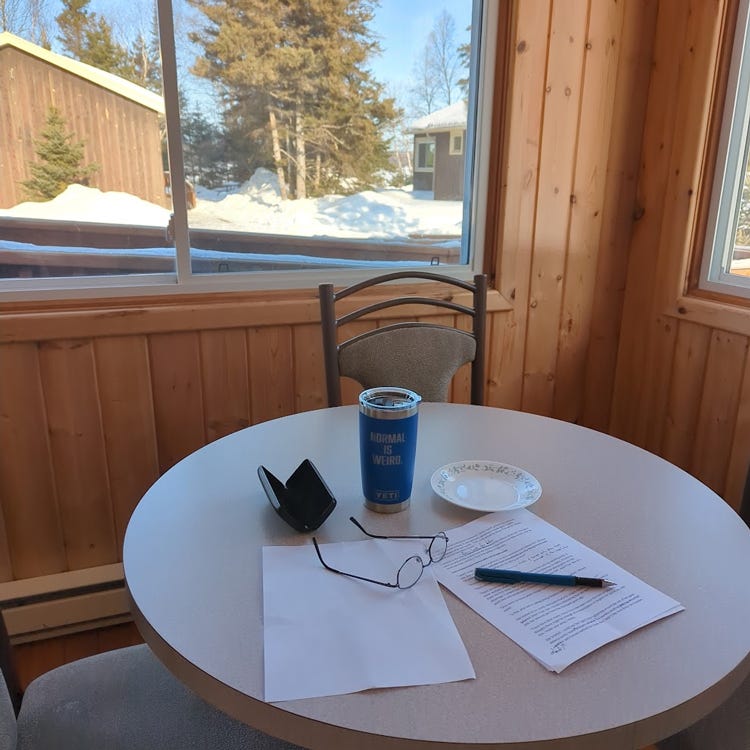
First, the urge to edit proved to be too much. There were so many things that I wanted to change that it seemed counter-productive not to change them. I quickly made peace with that and whipped out a pen. After all, if the whole point of the exercise was to read it in different places to find flaws, shouldn’t I just fix them then and there? Summers couldn’t fix his songs in a coffee shop because he needed a recording studio for that. I was following a standard that applied to making music, not to writing a novel. So, edit away!
Second, I was surprised at how many things I wanted to change in the WIP. Mostly, it was about cutting words. I’ve never had a problem with hitting the ejection seat button for words that don’t work. But when I separated myself from my office – the place where the work came together – I could see the words that didn’t work more clearly.
Third, words that worked in one place didn’t work in another place. That first review on the couch? I saw a ton of things that needed to be deleted, but I didn’t have a pen at that point. By the time I was on the writing retreat, it seemed like fewer things needed changed. I’m not sure if it was the location or the time between edits. It could have been just my perception. Whatever it was, I want to pursue this more so I can know exactly what’s happening here.
Fourth, and perhaps so obvious that I almost forgot to mention it, reading words on a page is different than reading them on a screen. Paper versus screen in itself changes context. That means that although bringing your laptop to the coffee may give you different context, you’ll likely have better results when you change the medium, too.
Overall, I’d call this exercise a success. I will tweak the process somewhat, but yeah, I’m amazed at what a difference this simple exercise made for my writing!

Over to You
How do you review and/or edit your work? Have you changed venues to get a different viewpoint on your work? Let us know in the comments below!
Until next time, keep writing with wild abandon!
~Graham

email me if you get lost.
You and Andy Summers may be on to something. My usual routine is to write at my desk listening to music. My editing environment changes depending on the season: colder weather will find me on my bed. Warmer weather will find me in the front porch or on the deck. But editing is done without music because I read my WIP out loud, My ears as well as my eyes are put to work.
I'm not sure change of place does it for me. I just spent two weeks in a sunny climate and my productivity took a sharp dip! Although, I'll relocate to a different place for 6 weeks this summer (running away from the Texas heat), like we always do, and from experience those weeks are good. I tend to work on something else than what keeps me occupied at home - a new project, a final editing on something that has been waiting for me for months. New place, new project seems to be the key.