


Instinctively, I try to help people who tell me that they’re not a real writer.
Whether, it should be noted, they ask for that help or not.
I do it in a kind, encouraging, helpful way. At least, that’s always my intent. I show them empirical evidence such as the writing contest they won or the books they’ve written or, you know, simply their notebooks full of words. I once framed a short story published in a magazine to give one writer tangible, encased-in-glass proof that they are indeed a writer.
I’ve written a ton of posts in this very space over the years about why many writers don’t see themselves as writers:
How Your Definition of Success Affects Your Success as a Writer
…and my first post, Even Neil Armstrong Felt Impostor Syndrome
Have I ever have pulled a writer from their own quagmires of impostor syndrome, self-doubt, and the perhaps overly high standards of what the word “writer” means? I just don’t know. Or more precisely, not that I know of.
Whatever feeling is keeping us down, it’s deeply rooted in our psyches. An entangled rat king of emotions that traps us beneath the floorboards of our own perceived writerhood.
I still don’t understand this strange phenomenon fully.
But recently, I got a step closer.
Like What You’re Reading? Upgrade to Paid! Hit the Subscribe Button (even if you’re already a free subscriber).

Fact vs. Faith and the Writer’s Struggle (Dan Blank Knows What I’m Talking About…)
Dan Blank, author of The Writer’s Shift, published a post entitled, “How Do You Define Your Success as a Writer?” He argues that writers need to feel like writers, and that no metrics can change that.
It was a lightbulb moment for me: being a writer, which can be proven, isn’t the same as feeling like a writer, which is a highly subjective assessment. But why is there such a disconnect?
Here’s the comment I left for Dan:
I’ve written several posts in my own Substack about what it means to be a writer, when can you call yourself a writer, what does success look like as a writer, and so on. One of the major themes that has come up is that writers are often *very* reluctant to call themselves writers. This has been a surprise to me – I’ve always identified as a writer, and I’ve been drawn to people who I would have thought would have identified that way, too.
But they don’t.
Why? I haven’t gotten that part worked out completely. But I think it has something to do about the mythology that writers seem to wrap up other writers in. We believe Margaret Atwood is a real writer because she makes millions and is always on book tours and signs hundreds of books every appearance. She has a magical pen that writes in gold, apparently.
Our pens write in common ink – anyone could scratch out what we write.
In other words, calling ourselves a writer is intertwined somehow with success. I am a writer when other people recognize I’m a writer.
But even that doesn’t work completely. I know of many people who win a writing contest or get published, and they put it down to luck or it’s not the right contest to win. They’re still not a *real* writer until they’ve published a book or made a million dollars or some such thing. Often, they don’t seem to know where the finish line is themselves!
This is not a criticism – there are so many writers who feel this way (including those who are clearly, objectively successful writers by the metrics) that there must be something else at play here. You’ve inched me closer to a better understanding with this post. What makes people *feel* like a writer? Are they too demur to do so? Do they not see themselves as real writers because they feel they fall short or because they place the term “writer” on too high a pedestal? Or maybe both?
Metrics can prove success. But only if you believe them. That seems to be the bigger challenge.
I’ve turned this over in my head since then, and here’s my working theory for the disconnect. All the proof and metrics in the world won’t sway someone from refusing to call themselves a writer, because being a writer isn’t a milestone event. They don’t know where the finish line is, as I mention in that comment, because there isn’t a finish line.
It’s like, when do boys become men? Some religions mark a special birthday. But I can tell you from personal experience, it doesn’t happen on any particular date. You become a man when you feel like a man. Often by outside forces, but rarely by outside validation. Ultimately, it’s a personal moment.
So to jump parallels, what event persuades writers that they are writers? It seems obvious to me now that it something that has to come from within. I keep hearing about some of the most accomplished and celebrated writers out there still feeling like imposters. If millionaire authors still haven’t found their finish lines, what chance do we mere mortals have?
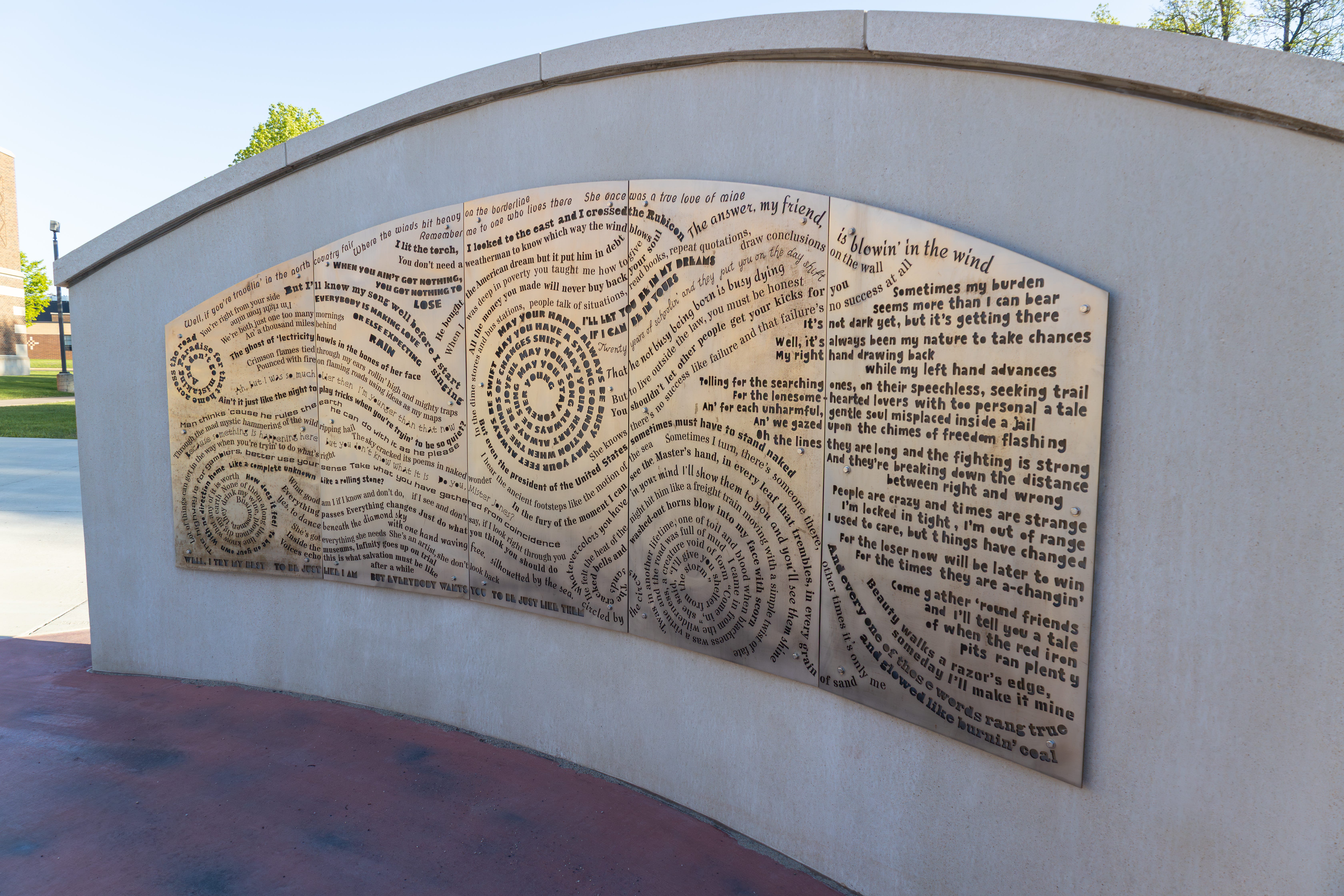
The answer, my friend, is blowing in the wind. I’ll let you know if it ever blows my way.
In the meantime, many thanks to Dan Blank for sending this gust of insight.
Over to You
What makes your feel like a writer – or not a writer? I particularly want to hear what might be holding you back, if that’s the case. Do you have a vision or goal – a threshold you need to cross to become a capital-W “Writer” in your mind? Or is it just something out there you’re working towards, and you’ll know it when you feel it? Is it even something you’re working towards?
I want to know! Leave a comment below or drop me a note. I’m really curious if there’s anything more I can do to help writers whose exploits outweigh their self-estimations.
Until next time, keep writing with wild abandon!
~Graham


email me if you get lost.